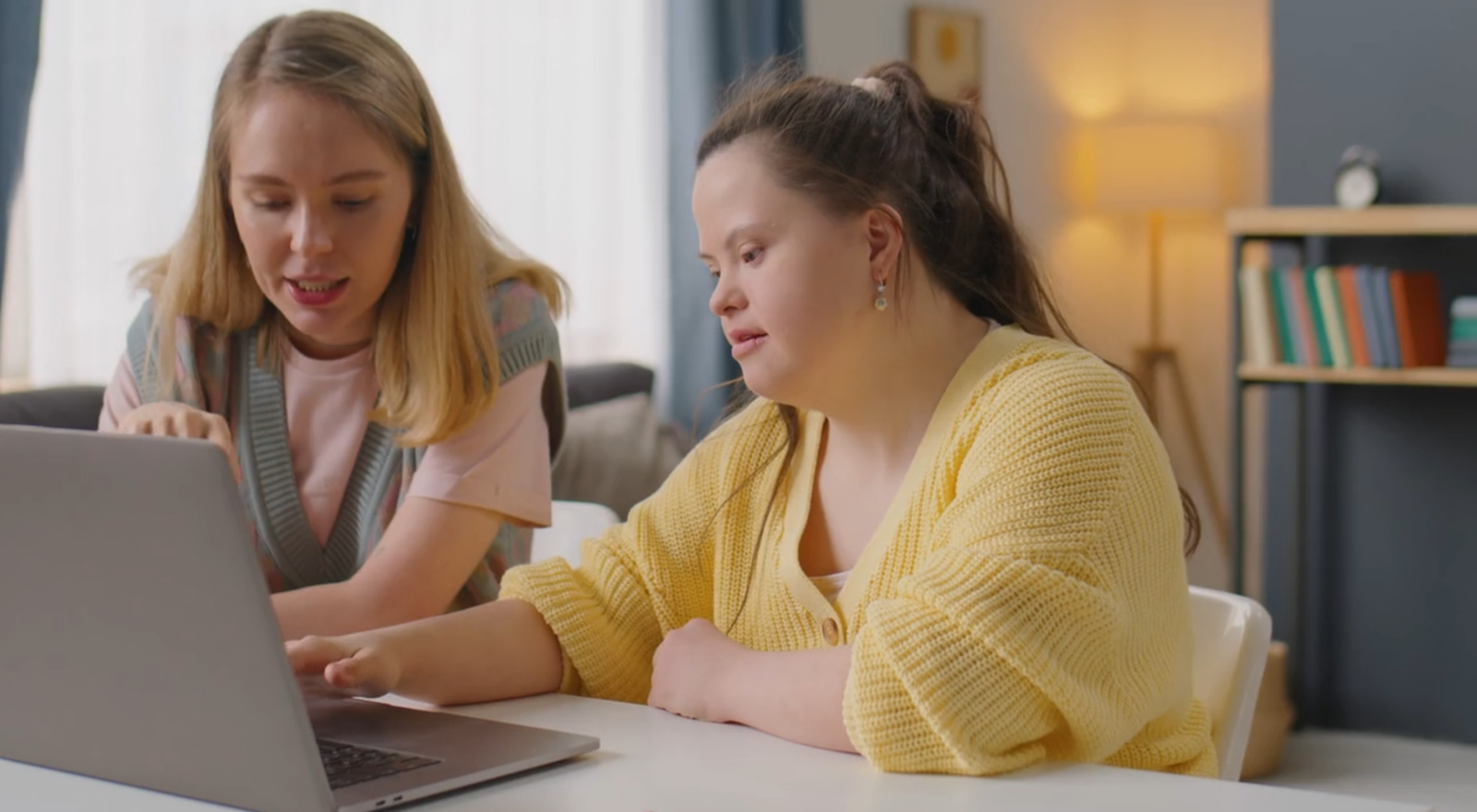
Community-based support plays an important role in helping adults with developmental disabilities build confidence, strengthen independence, and stay connected to everyday life.
At Ameriwell Care, community support is about more than supervision — it’s about helping individuals participate meaningfully in the world around them.
What Is Community-Based Support?
Community-based support helps individuals safely engage in activities outside the home while receiving thoughtful, consistent guidance.
This may include:
- Attending programs or activities
- Building social connections
- Practicing daily living skills
- Participating in community outings
- Developing confidence in new environments
Every level of support is tailored to the individual’s comfort, goals, and pace.
Encouraging Independence Without Removing Support
Independence does not mean navigating life alone. In many cases, the right support creates more opportunities for growth, confidence, and participation.
At Ameriwell Care, we focus on helping individuals:
- Feel comfortable in community settings
- Build confidence gradually
- Strengthen communication and social skills
- Maintain dignity and individuality
Support is always provided with patience, encouragement, and respect.
A Steady Presence in Everyday Life
Meaningful care comes from consistency. Our team works closely with individuals and families to ensure support remains stable, responsive, and aligned with changing needs over time.
Through compassionate guidance and ongoing communication, Ameriwell Care helps individuals build stronger connections — both within the community and within themselves.
How Community-Based Support Is Funded in New Jersey
Community-based support is one of the services New Jersey’s Division of Developmental Disabilities funds through an individualized budget rather than something a family arranges privately. Knowing how that works makes it far easier to ask for the right amount of it.
DDD serves New Jersey adults 21 and older with a developmental disability that began before age 22 and who qualify for New Jersey Medicaid. Adults living at home or independently are generally served through the Supports Program; adults who also need a residential placement fall under the Community Care Program. Our plain-English guide to NJ DDD sets out the difference, and what DDD is and who it serves covers the eligibility basics.
After eligibility, an assessment called the NJCAT establishes the level of support a person needs, which in turn shapes the budget available. A Support Coordinator then helps build the Individualized Service Plan. Community-based hours have to appear in that plan, with a DDD-approved provider named to deliver them, before anything begins.
The practical consequence: the number of community hours a person gets is a planning decision made once a year, not something that adjusts on its own when life changes.
What a Week of Community-Based Support Can Look Like
The phrase “community-based support” tells families almost nothing about the actual shape of a week. In practice it is ordinary activity with the right person alongside.
A week might include a regular volunteer shift somewhere the person is now known by name, a grocery run where they handle the list and the payment while support stays a step back, a gym or library visit that anchors a particular afternoon, and one less structured outing chosen by the person rather than scheduled for them.
What makes that week work is rarely the activities themselves. It is that the same support is there each time, so the person is not re-establishing trust every session. That is also why consistency matters more than variety for most people early on.
Where anxiety or behavior makes community settings hard to enter at first, community support often runs alongside behavior support, so the strategies used at home carry over into public settings instead of stopping at the front door.
Is Community-Based Support the Right Fit?
It usually is when a few things are true at once:
- The person is safe and reasonably settled at home, but the week has narrowed to the house.
- There are goals that simply cannot be practiced indoors — transport, money, ordering, asking for help from a stranger.
- Social contact has thinned out, particularly after leaving school-based programming.
- The family is the only source of transport and company, which is not sustainable indefinitely.
If the harder problems are still centered on the home itself — mornings, routines, personal care — home-based support is often the better place to start, with community hours added once the day has a stable base. Families weighing this up may also find how family involvement shapes care useful.
Starting Small Is Usually the Right Call
A common mistake is to begin community-based support with an ambitious schedule. Several new places, several new people, several new expectations, all in the first fortnight. It is well intentioned and it frequently backfires.
A steadier start looks like one or two fixed outings a week, at the same times, to places chosen partly because they are predictable. The aim in the first month is not progress on goals — it is that the person comes to expect the routine and the support worker becomes familiar. Goals move faster afterwards, from a base that holds.
It also gives everyone something concrete to review at the next planning meeting. “This worked, this did not, here is what we would change” is a far stronger position than an unmeasured schedule. Families new to all of this may want to start with what DDD covers, or see the full range of services we provide.
Looking for Community-Based Support?
Ameriwell Care provides thoughtful, person-centered support designed to encourage confidence, connection, and independence.